43,252,003,274,489,856,000 WAYS TO SCRAMBLE IT
The 3x3 Rubik's Cube, explained face by face
A single-page resource built around one puzzle. Learn how the Rubik's cube was invented, how its internal mechanism actually holds together, which cube type fits your skill level, and how to choose the best Rubik's cube before you buy one.
- Invented
- 1974
- Combinations
- 43 Qn
- God's Number
- 20 moves
- World record
- 2.76s
White Face — Origin Story
About the Rubik's Cube
Before it became the best-known puzzle on the planet, the Rubik's cube was a teaching aid built to solve a much smaller problem: how do you show students that a structure can rotate freely in three dimensions without falling apart?
What exactly is a Rubik's Cube?
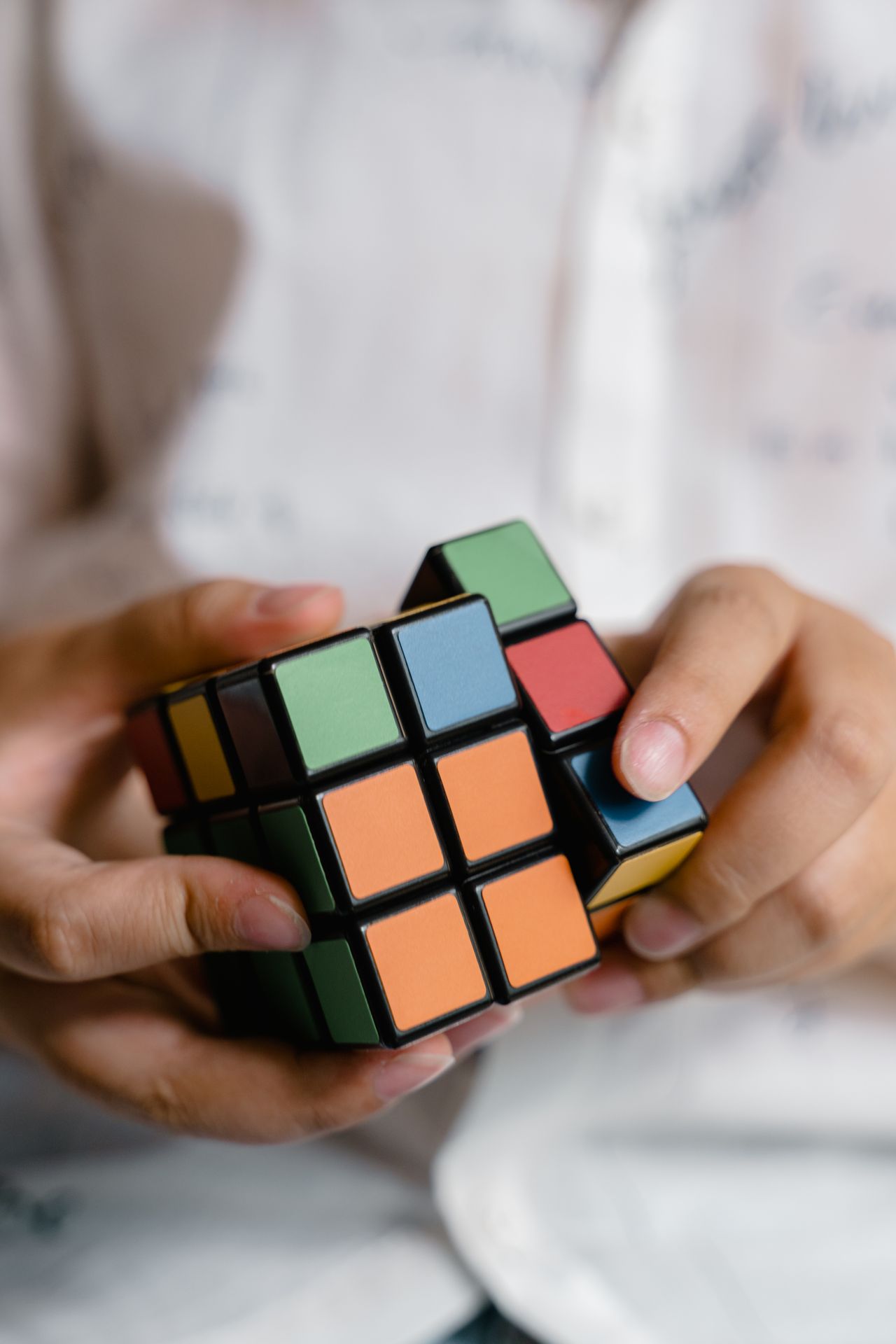
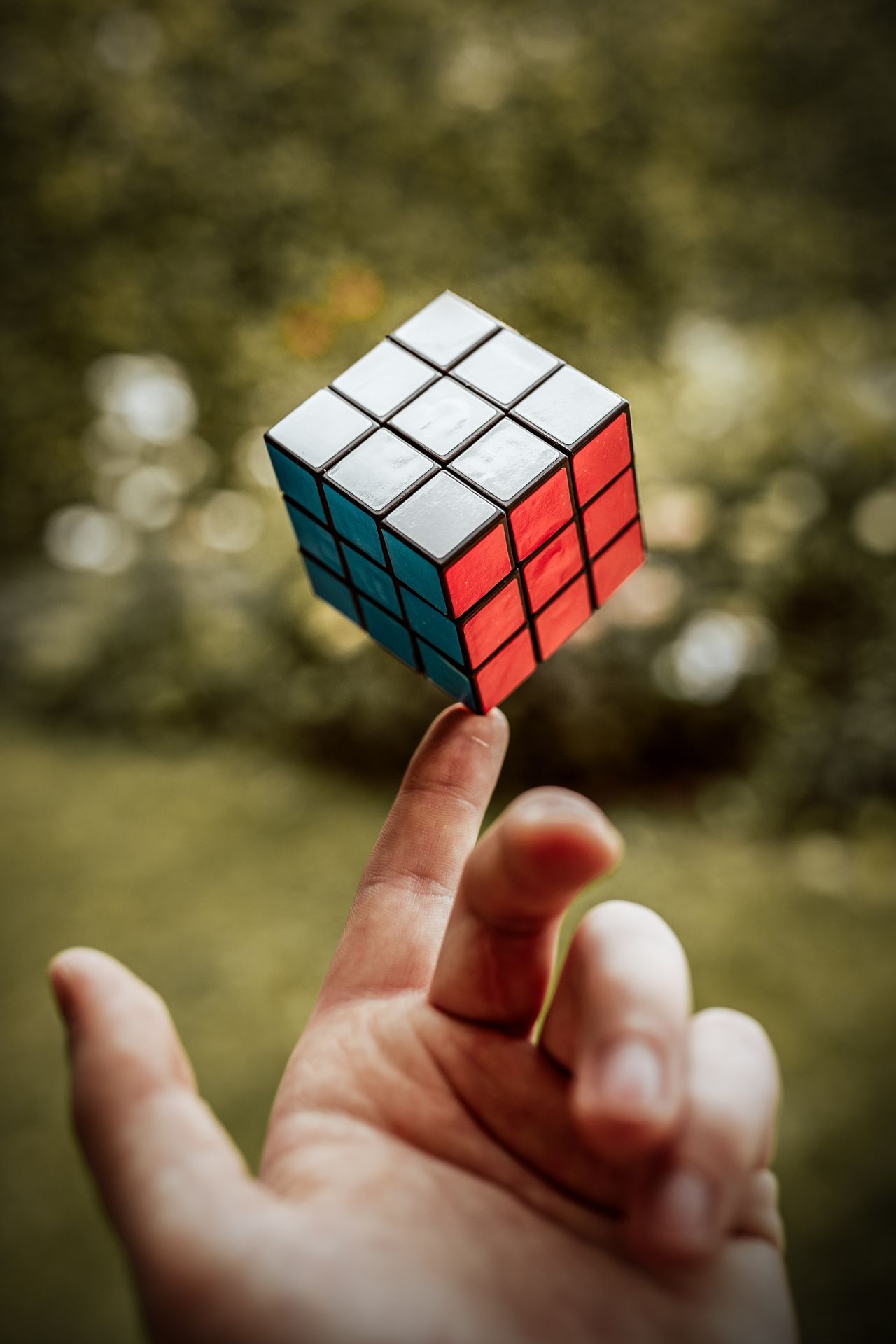
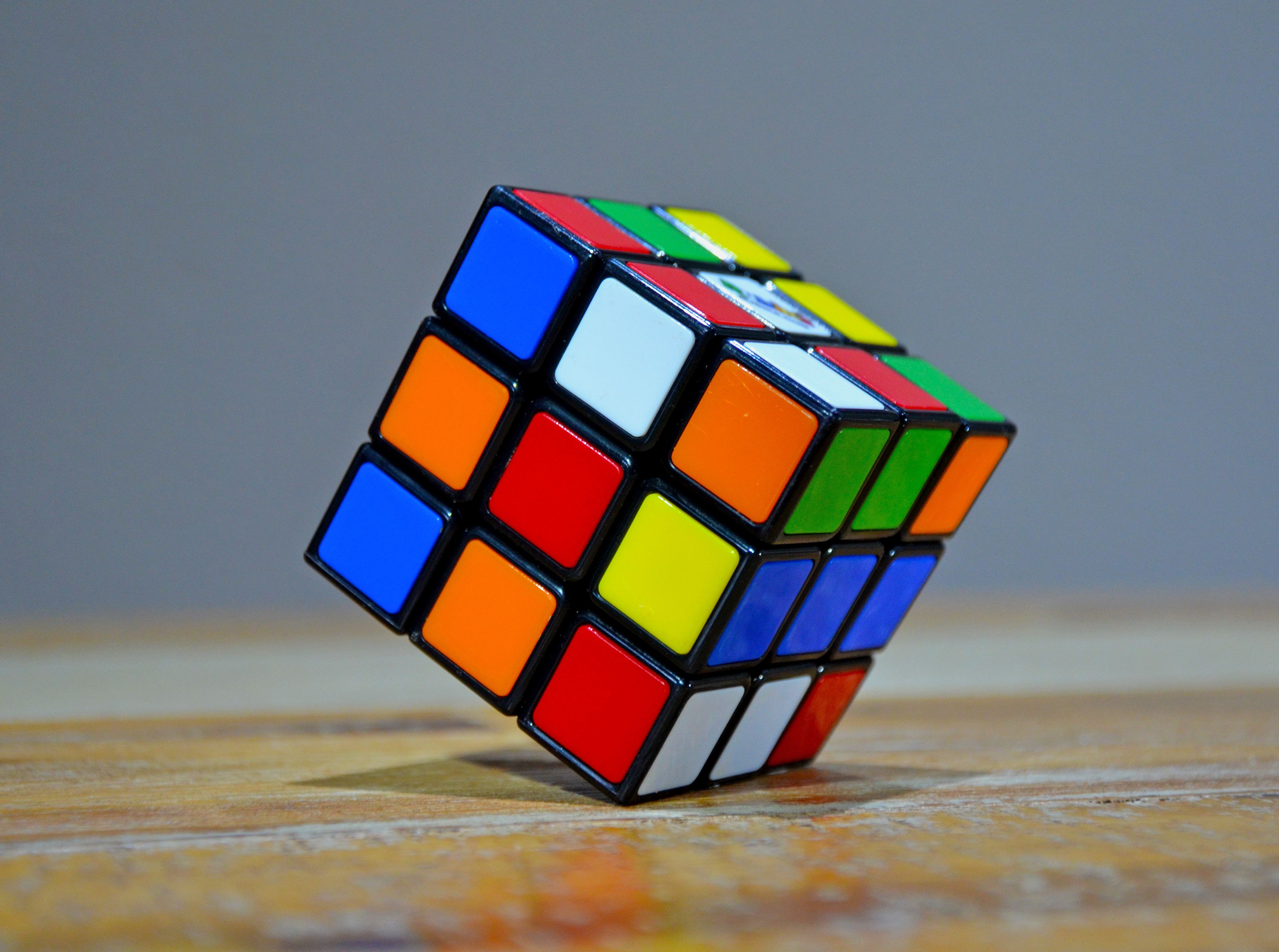
A 3x3 Rubik's cube is a combination puzzle made of 26 visible smaller cubes, often called cubies, wrapped around a hidden internal core. Each of the six outer faces displays nine colored squares, known as facelets, for 54 facelets total. The objective is simple to state and famously hard to execute: return every scrambled face to a single, solid color.
The 26 cubies break down into three families. Six center pieces sit in the middle of each face, carry one color, and never change position relative to one another, which is why they are used to identify the correct color for a solved face. Twelve edge pieces carry two colors and sit between two centers. Eight corner pieces carry three colors and occupy the points of the cube.
The invention of the cube
The puzzle was invented on May 19, 1974, by Erno Rubik, a Hungarian sculptor and professor of architecture at the Budapest College of Applied Arts. Rubik was experimenting with a wooden block structure to help explain how independent parts could shift and rotate while remaining connected, and he built the first working prototype using paper, rubber bands, and paperclips before refining the mechanism. He originally called his creation the Magic Cube, or Buvos Kocka in Hungarian.
According to accounts of the invention, Rubik scrambled his prototype to test the mechanism and then realized he had no idea how to restore it, a process that reportedly took him roughly a month to work out on his own. That struggle became the puzzle's entire appeal.
From Budapest workshop to global phenomenon
The puzzle was patented in 1975 and sold only in Hungary for several years before an international licensing deal with the Ideal Toy Corporation brought it to a global audience in 1980 under its new name, the Rubik's Cube. It debuted at toy fairs in London, Paris, Nuremberg, and New York and quickly became a defining object of the decade, earning multiple national Toy of the Year awards.
Interest cooled somewhat by the mid 1980s, but the puzzle never disappeared. The World Cube Association was formed to standardize competitive rules, and the internet gave rise to a new generation of solvers who shared tutorials, timing software, and solving methods, turning a 1970s teaching tool into a permanent fixture of puzzle and competitive culture.
1974
Invented by Erno Rubik as a teaching model
1975
Patented and sold locally in Hungary
1980
Licensed worldwide, renamed Rubik's Cube
1982
First official World Championship, Budapest
Yellow Face — Why It's Worth Owning
Why choose a Rubik's Cube?
It fits in a pocket, costs less than a takeout order, and has kept people engaged for five decades. Here is what actually makes it worth owning, whether the goal is casual fun or serious competition.
Brain training made portable
Solving a cube exercises spatial reasoning, short-term memory, and pattern recognition at the same time, in a format small enough to carry anywhere.
An affordable hobby with no ceiling
A first cube can cost less than ten dollars, and the same hobby scales all the way up to competition-grade magnetic speedcubes without ever feeling like a different activity.
A genuine global community
The World Cube Association sanctions competitions across more than 100 countries, and online tutorial culture makes it easy to learn from and compete against people anywhere.
Screen-free, tactile stress relief
The repetitive, tactile motion of turning a cube is frequently used as a fidget-style, screen-free way to unwind or refocus attention during breaks.
Builds patience under pressure
Learning algorithms and executing them accurately while under a timer trains sequencing, composure, and problem-solving discipline that transfers well beyond the puzzle.
A timeless collectible
Decades of variants, from mirror cubes to shape mods to licensed editions, give collectors an ever-expanding catalog built on one original design.
Blue Face — The Mechanism
How a Rubik's Cube actually works
The cube's secret is a hidden core shaped like a three-axis spider. Six arms extend from a central point and each one holds a single center piece, letting that layer spin freely while the arm keeps it anchored to the middle of the puzzle.
Edge and corner pieces are not attached to the core directly. Instead, they have rounded inner shoulders that slot around the arms and stay trapped in place by the layers of pieces around them, which is exactly why a cube can rotate indefinitely without ever coming apart during normal use.
The three types of pieces
6
Center pieces
One color each. Fixed relative position. Define the solved color of each face.
12
Edge pieces
Two colors each. Sit between two center pieces along the cube's edges.
8
Corner pieces
Three colors each. Occupy the eight points where three faces meet.
Cube notation: the universal language of solving
Every face of the cube has a standard letter, which lets solvers anywhere in the world share the exact same instructions regardless of spoken language. A letter on its own means a clockwise quarter turn of that face; an apostrophe means a counter-clockwise quarter turn; a 2 means a half turn.
| Letter | Face | Example | Meaning |
|---|---|---|---|
| U | Up | U' | Top face, counter-clockwise |
| D | Down | D2 | Bottom face, half turn |
| L | Left | L | Left face, clockwise |
| R | Right | R' | Right face, counter-clockwise |
| F | Front | F | Front face, clockwise |
| B | Back | B2 | Back face, half turn |
Just how many combinations are there?
A 3x3 Rubik's cube has exactly 43,252,003,274,489,856,000 reachable positions, roughly 43 quintillion. That figure comes from the possible arrangements and orientations of the corner and edge pieces, narrowed down by the physical constraints of the mechanism, which rule out certain combinations that look valid but can never be reached by turning the faces.
Despite that staggering number, mathematicians and computer scientists proved in 2010, using a large-scale distributed computing effort, that every single one of those positions can be solved in 20 moves or fewer. That maximum is known as God's Number, and it holds true no matter how scrambled the cube appears.
Green Face — Know Your Cube
Types of Rubik's Cubes
Not every cube on the market is built the same way. Understanding these categories makes it far easier to match a purchase to how the cube will actually be used.
Stickered cubes
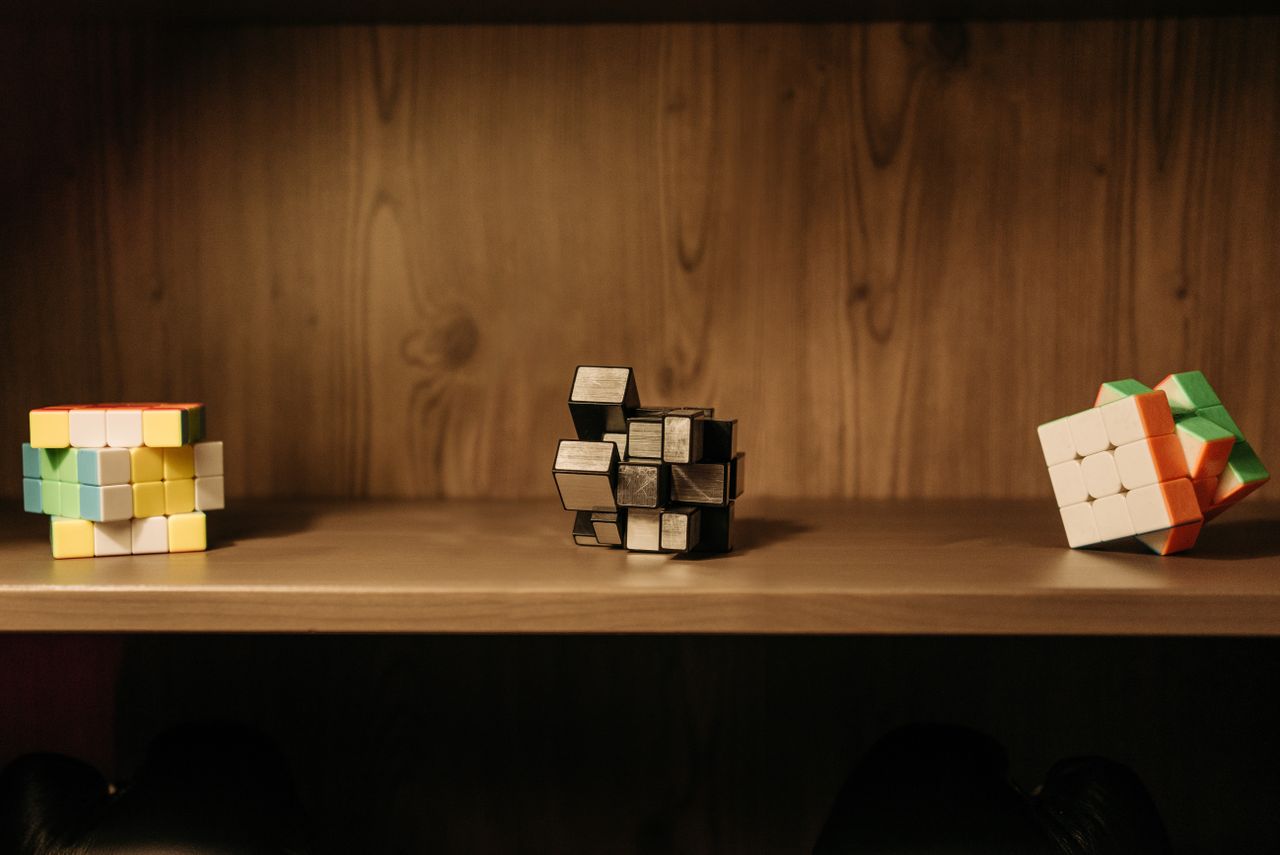
The original design. Vinyl stickers are applied over a black or white plastic body. Budget-friendly and visually classic, though stickers can peel or fade with heavy use.
Stickerless cubes
Each piece is injection-molded in solid color plastic, so the color runs all the way through. Nothing to peel, and color stays visible even if a piece chips or cracks.
Magnetic cubes
Small magnets sit at each piece junction to pull layers into alignment as they turn, giving a snappier, more guided feel. Magnetic cubes are now the standard among competitive speedcubers.
Budget and beginner cubes
Simple ABS plastic construction with looser tolerances. Inexpensive and perfectly fine for learning the basics before upgrading.
Speedcube and competition cubes
Engineered tensioning systems, adjustable spring or magnet strength, and generous corner-cutting tolerance. Common brands include GAN, MoYu, QiYi, and YJ.
Size variants beyond the classic 3x3
The 3x3x3 is the original and remains the most popular size, but the same mechanism scales up and down. The 2x2x2 Pocket Cube removes edges and centers entirely, the 4x4x4 Rubik's Revenge and 5x5x5 Professor's Cube add extra layers of complexity, and specialty makers now produce cubes as large as 21x21. This guide focuses on the classic 3x3, the format most people mean when they say Rubik's cube.
Red Face — Materials & Quality
Build materials and quality control
Two cubes can look identical in a product photo and feel completely different in the hand. Materials and manufacturing precision are what separate a smooth, reliable cube from a stiff, unreliable one.
What's inside a well-made cube
- ABS plastic body — Acrylonitrile Butadiene Styrene is the standard choice for cube pieces because it is light, impact-resistant, and easy to mold to tight tolerances.
- POM plastic option — Some premium cubes use Polyoxymethylene for a smoother, slightly self-lubricating turning feel, at the cost of a heavier hand feel.
- Precision core mechanism — A well-molded spider core is what determines pop resistance and turning consistency over thousands of solves.
- Adjustable tensioning — Spring or magnetic tensioning systems let solvers dial resistance from loose and fast to firm and controlled.
- Neodymium magnets — Found in most modern speedcubes, these small magnets align layers precisely as a turn completes.
- Stickers versus dyed plastic — Vinyl sticker sheets are adhesive-backed PVC film, while stickerless pieces are dyed before or during molding so color runs through the material.
Quality control checkpoints to look for
- Consistent gaps and tolerances between every piece, with no visible warping
- Reliable corner-cutting, meaning a layer can begin turning before an adjacent layer is fully aligned
- Pop resistance testing so pieces stay seated during fast or off-angle turns
- Color consistency and UV colorfastness so tiles do not fade unevenly over time
- Factory-preset tension that feels usable right out of the box, before any personal adjustment
- Toy safety certification, such as ASTM or CE marks, along with small-parts warnings for children under three
Signs of a poorly made cube
- A grinding or crunching sensation during normal turns
- Pieces popping loose during ordinary, non-aggressive solves
- Stickers lifting or peeling within the first few days of use
- Visible gaps or uneven spacing between pieces on the same face
- Corners catching or locking up during fast, layered turns
Orange Face — Buying Guide
How to choose the best Rubik's Cube for you
The right cube depends entirely on what it is for. Work through these steps in order and the decision narrows itself down quickly.
1. Define your goal first
2. Match cube type to skill level
| Level | Recommended type | Typical price |
|---|---|---|
| Beginner | Stickered or basic stickerless | $5 – $10 |
| Intermediate | Stickerless, adjustable tension | $10 – $20 |
| Advanced / competitive | Magnetic flagship speedcube | $25 – $45 |
3. Understand turning feel descriptions
4. Look for adjustable tensioning
5. Read verified reviews and watch unboxings
6. Confirm safety certification for children
7. Consider bundle value
Ready to compare cubes in the market?
Browse current listings and use the checklist above to pick the option that matches your goal.
Popular Rubik's Cube solving methods
Every method solves the same puzzle through a different sequence of priorities. Here is how the four most widely used approaches compare.
Beginner method
Layer-by-layer
Solve the bottom cross, then bottom corners, then the middle layer edges, then the top cross, and finally the top layer. It takes roughly 100 moves on average but requires memorizing only a handful of short sequences, making it the standard starting point for new solvers.
Speedcubing standard
CFOP
Short for Cross, F2L, OLL, and PLL, this is the most widely used competitive method, developed in the 1980s and 1990s by solvers including Jessica Fridrich. A full implementation uses up to 78 algorithms for orienting the last layer and 21 for permuting it, bringing average solves down to around 55 moves.
Block-building
Roux
Developed by Gilles Roux, this method builds blocks on the left and right sides and finishes by permuting the remaining pieces, often using cube rotations rather than pure face turns. It requires fewer memorized algorithms and is popular among one-handed solvers.
Edge-first
ZZ
Starts by orienting all edges early, which unlocks fast, fully algorithmic finishing steps later in the solve. It rewards solvers who are comfortable planning several moves ahead during the opening phase.
Speedcubing and world records
Competitive speedcubing has been governed by the World Cube Association since it held the first official World Championship in Budapest on June 5, 1982, where Minh Thai won with a solve of 22.95 seconds. Records have fallen steadily ever since.
As of 2026, the fastest official single solve stands at 2.76 seconds, set by nine-year-old Teodor Zajder of Poland at the GLS Big Cubes Gdansk event on February 8, 2026, the first officially recognized solve under three seconds. The fastest average of five solves is 3.51 seconds, set by Yiheng Wang in June 2026.
No matter how fast solving technology and technique get, one number never changes: God's Number remains 20, the mathematically proven maximum number of moves needed for any legal position.
Fastest single solve
2.76s
Teodor Zajder, Poland — Feb 8, 2026
Fastest average of 5
3.51s
Yiheng Wang, China — Jun 17, 2026
First World Championship
22.95s
Minh Thai, Budapest — Jun 5, 1982
Theoretical maximum
20 moves
God's Number, proven in 2010
A brief record timeline
Sub-10-second solves first appeared in 2007. The sub-9-second barrier fell in 2008. Progress continued through the 2010s and 2020s as magnetic cubes, refined lubricants, and increasingly efficient methods pushed times down year after year, culminating in the first sub-3-second solve in February 2026.
Caring for your Rubik's Cube
A little routine maintenance keeps any cube turning smoothly for years instead of months.
Lubrication
Silicone-based cube lubricant reduces internal friction. Apply sparingly to the core and contact points every few weeks for frequent use.
Cleaning stickered cubes
Wipe with a barely damp cloth and mild soap. Avoid soaking, since prolonged moisture weakens sticker adhesive.
Cleaning stickerless cubes
Since color runs through the plastic, stickerless pieces can be rinsed more thoroughly without worrying about peeling.
Tension adjustments
Turning the spring screws loosens a cube for speed or tightens it for stability and control, depending on preference.
Storage
Keep cubes out of prolonged direct sunlight to prevent color fading, and store in a pouch or case to avoid surface scuffing.
Frequently asked questions
Straightforward answers to the questions people ask most before buying or learning to solve a Rubik's cube.
A standard 3x3 cube has 43,252,003,274,489,856,000 possible arrangements, roughly 43 quintillion. Despite that number, every solvable position can be solved in 20 moves or fewer.
God's Number is 20, the maximum number of moves ever required to solve any legally scrambled cube using the shortest possible solution. It was proven in 2010 using a large-scale distributed computing effort.
Erno Rubik, a Hungarian professor of architecture, invented the puzzle on May 19, 1974, as a teaching tool. It was licensed internationally and renamed the Rubik's Cube in 1980.
A stickered cube uses adhesive vinyl squares over plastic pieces, while a stickerless cube is molded so color runs through the plastic itself, which resists peeling and stays visible even after chipping.
For most regular solvers, yes. Magnets provide positional feedback that guides layers into alignment, reducing overshoot, and they are now standard on most competitive speedcubes.
Most new solvers using the layer-by-layer method land somewhere between one and three minutes once they've learned the full sequence, with times dropping steadily as the moves become automatic.
Loosen the tension screws slightly, apply a small amount of silicone lubricant, and avoid forcing turns that are not fully aligned. Persistent popping on a new cube is often a sign of a factory tension issue or a manufacturing defect.
Start with the classic 3x3x3. It has the most tutorials, the largest community, and forms the foundation for every larger or specialty size.
Many children pick up the basics from around six years old with guidance, though small detachable pieces mean cubes are generally not recommended for children under three without supervision.
As of 2026, the fastest official single solve is 2.76 seconds, set by Teodor Zajder of Poland on February 8, 2026. The fastest average of five solves is 3.51 seconds, set by Yiheng Wang in June 2026.
Not to solve it at all. The layer-by-layer beginner method uses only a handful of short move sequences. Larger algorithm sets like those used in CFOP are only necessary for faster, more competitive solving.
Six faces. One solution.
Ready to pick up a Rubik's Cube and start solving?
Use everything on this page, the buying guide, the material breakdown, and the reviews, to choose a cube that matches your goals.
Shop NowOpens Amazon in a new tab